

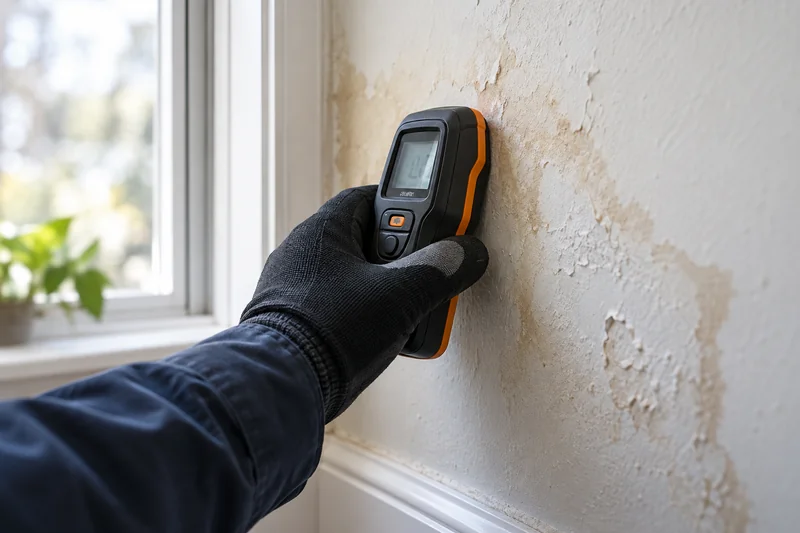
A water stain on a ceiling or wall tells you where damage is visible. Understanding the loss also means asking where the moisture came from, how it reached the affected area, and what conditions contributed to the problem.
A water damage investigation helps organize those questions. For property owners, managers, and insurance professionals, a clear account of the property’s history is a useful place to begin.
Consider the possible sources of moisture
Buildings can be exposed to moisture through rain, groundwater, plumbing problems, and condensation. Water can also move through materials and assemblies in different ways, so the visible condition needs to be considered in context. The Whole Building Design Guide’s moisture management overview explains the relationship between moisture sources, movement, and building materials.
Rather than naming a source from the stain alone, frame the initial question around the evidence: what information would help explain why this area became wet?
Build a clear timeline
Start with the first time someone noticed the condition. Record what was observed and what was happening at the property at that time. If the exact date is unknown, say so instead of assigning an estimated date as fact.
Consider an illustrative example: a property manager reports a stain below a window after rain. A useful history would include when the stain first appeared, whether it was seen during earlier weather events, and whether any work had recently been completed nearby. Those details describe a pattern without assuming that the window caused the damage.
Keep the timeline focused on observations and actions. A statement such as “the ceiling was repainted in June and staining was noticed again in August” gives the investigator more to work with than “the repair failed.”
Organize records before the inspection
Collect available information into a folder and identify who created each record. Useful material to discuss with the investigator includes:
- Photographs showing the affected area at different dates.
- Plumbing, roofing, window, or other relevant repair records.
- Reports and photographs from earlier inspections or mitigation work.
- Notes about when the condition appears, changes, or returns.
Separate original records from your summary. Preserve the original image files when available, and identify any information you have not yet been able to obtain. An incomplete but clearly labeled file is easier to evaluate than one that mixes assumptions with documented events.
Agree on the questions and scope
Explain what you need to understand: the source of a reported leak, the circumstances of a water loss, or a recurring condition after repairs. Ask what areas the proposed examination covers and whether additional access or testing may need to be discussed.
Moisture concerns can span design, construction, and building operation, which is why property history matters. The EPA’s moisture control guidance addresses these different stages of a building’s life.
When reviewing findings, ask the investigator to distinguish documented conditions from interpretations and unresolved questions. That distinction makes the report easier to use when planning the next step.
Get help understanding a water loss
Advanced Analysis investigates water damage and water intrusion using scientific principles and methods. We provide analysis and documentation to help clients understand the causes of property damage.
Call 877-436-5830 or email info@advancedanalysis.net to discuss the loss, the records available, and the questions you would like the investigation to address.